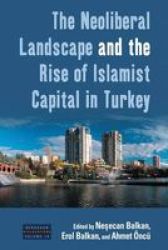

Islamist capital accumulation has split the Turkish bourgeoisie and polarized Turkish society into secular and religious social groupings, giving rise to conflicts between the state and political Islam. By providing a long-term historical perspective on Turkey's economy and its relationship to Islamism, this volume explores how Islamism as a political ideology has been utilized by the conservative bourgeoisie in Turkey, and elsewhere, to establish hegemony over labor.
The contributors analyze the relationship between neoliberalism and the political fortunes of the Islamist Justice and Development Party (AKP), and examine the similarities and differences amongst new factions in the secular and Islamic middle class that have benefited economically, socially, and culturally during the AKP's reign.
The articles also investigate the impact of the Gulen Movement and the role of the media in shaping the contours of intra-class struggle within contemporary Turkish political and social life. Review: This is a strong and important collection. The unifying thesis throughout refers to the ascendancy of a specifically Turkish form of Islamic capitalism.
The main emphasis throughout concerns the contested character of this ascendancy at the highest levels of Turkish state and society. These are important and intimately interwoven themes - The collection leaves a clear impression that the roots of the recent battles over Taksim Square run deep; their implications will continue to simmer throughout the country.
Nothing has been resolved. * Sidney Plotkin, Vassar College
 Related Products
Loading similar products...

Stay informed about the best deals and price drops. Choose which notifications you'd like to receive from PriceCheck.


