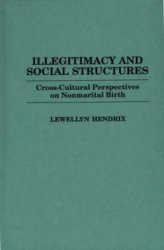

Sanctions for illegitimacy vary enormously across cultures and are linked to social structure. Some societies handle non-marital births in a relaxed way; others use restitutive sanctions; and others repressive sanctions. This study of 122 non-industrial societies shows that the regulation of illegitimacy is more varied than any particular theory suggests (and there are many, including Marxism, functionalism, sociobiology, and feminism).
The work aims to test a variety of theoretical ideas about the possible factors involved in social regulation of illegitimacy - social hierarchy, fraternal interest groups, female power, extended family structure, affection for children, and father involvement with infants - and to examine combinations of these factors for predictive power.
This study will be of interest to scholars and students in sociology, family studies, and cultural anthropology. Review: This book is the first systematic cross-cultural investigation of why societies vary in how they react to illegitimacy (nonmarital births). The discussions of results and related topics are extensive, thoughtful, and constructive.
The many positive results (as well as the test results that contradict various theories) will have to be accommodated by any future theory that purports to explain why some societies severely punish illegitimacy while others tolerate it without sanction. This book is a pioneering achievement. -Melvin Ember, president Human Relations Area Files, Inc.
 Related Products
Loading similar products...

Stay informed about the best deals and price drops. Choose which notifications you'd like to receive from PriceCheck.


