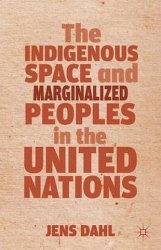

| Manufacturer | Palgrave Macmillan |
For more than 20 years, Jens Dahl has observed and now analyzed how a relatively independent space, the Indigenous Space, has been constructed within the confines of the United Nations. In the UN, indigenous peoples have achieved more than any other group of people, minorities included. The book traces this to the ability of indigenous peoples to create consensus among themselves; the establishment of an indigenous caucus; and the construction of a global indigenousness in a continuously developing process in which contentious relationships and symbols have been constructed, reformulated, negotiated and re-negotiated internally and with the states.
In this process 'indigenous peoples' developed as a category and an evolving concept. Dahl looks into the ability of different indigenous representatives to make an impact on the UN processes and use achievements for purposes at home. Combining an historical overview and first-hand account of the indigenous involvement with the UN with an analysis of global indigenous identity as a relativist and constructed term rather than a positivist definitional concept, Dahl addresses how indigenous peoples have implemented the UN achievements at home.
Review: This book sets the record straight and seeks to redress the situation by examining the UN's posture toward indigenous peoples rights and issues. This book is recommended to social scientific students and readers, but most of all for all who need information about what indigenous peoples have achieved by develops an 'alternative space' within and outside the UN structure. - Henry Minde, professor, department of History and Religious Studies, University of TromsA,, Norway Jens Dahl's nuanced history and analysis of the emergence of a global indigenous network impresses on a number of fronts: firstly, its temporal and spatial scope covering the emergence of transcultural mobilization from disparate world regions and political contexts; secondly, its perceptive ethnographic investigation of the local and international fora, agencies and agents (author included) that have enabled the institutionalization of an indigenous presence at the UN; and thirdly, his forceful theoretical rejoinder to those who attribute structural inefficacy to subaltern voices.
Dahl balances attention between the international domain and well-selected case studies that highlight the diversity of indigenous organizations, from Maasai NGOs in Tanzania and Kenya and Aymara grassroots organizations in the Andes to Jumma resistance fighters in Bangaladesh and the Inuit Greenland Self-Rule Parliament.
Dahl's own involvement as a former director of the International Work Group for Indigenous Affairs (IWGIA) lends him a perspective that few scholars can match. A tour de force, this book will be the one people turn to for decades to come to learn how to effect political change on a global scale. - Kelly Askew is and anthropologist and Director, of African Studies Center, The University of Michigan, and author of Performing the Nation: Swahili Music and Cultural Politics in Tanzania)
 Related Products
Loading similar products...

Stay informed about the best deals and price drops. Choose which notifications you'd like to receive from PriceCheck.


