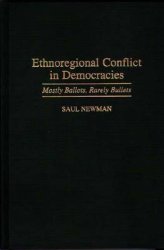

Most advanced industrial democracies have been successful in controlling ethnic political conflicts peacefully. This book examines ethnoregional conflicts in seven ethnoregions-in Scotland, Flanders, Wallonia, Brussels, Quebec, Northern Ireland, and the Basque region of Spain-to explain what mactors determine electoral support for ethnoregional parties, why in some cases electoral conflict has co-existed with ethnic violence, and why there appears to be an inverse relationship between electoral success and policy success among many ethnoregional parties.
As ethnic conflicts-peaceful and violent-continue to rage around the world, this important new study merits the attention of scholars and students in comparative politics and ethnic studies. Review: Saul Newman has written an informative and theoretically engaging book that returns to a classic question: Do contemporary social changes lead to political instability?
Newman makes a provocative argument that challenges the post-materialist vision presumed by many scholars today and that places government decisions at the center of political history. Newman's comparative study is so empirically rich and theoretically explicit that it undoubtedly will inspire a broad range of thinkers interested in either European history, contemporary nationalist movements, or the political consequences of social change. -Cyrus Ernesto Zirakzadeh, Associate Professor of Political Science University of Connecticut
 Related Products
Loading similar products...

Stay informed about the best deals and price drops. Choose which notifications you'd like to receive from PriceCheck.


