
| Manufacturer | Unbranded |
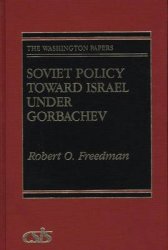
Mikhail GorbacheV's rise to power in 1985 signalled the beginning of significant improvements in Soviet-Israeli relations--thoroughly examined in this carefully researched volume. Based on an analysis of Soviet behavior and interviews with Israeli and Soviet Foreign Ministry officials and PLO leaders, this study describes how eased tensions between the Soviet Union and Israel have been achieved and analyzes the Soviet Union's reasons for advancing diplomatic relations with Israel.
Robert Owen Freedman follows the progress of Soviet policy from the 1985 meeting between the Soviet and Israeli ambassadors to France, to the 1987 arrival of the Soviet consular delegation in Israel, which heralded rapid improvement on the diplomatic front, to the 1989 trade agreements, cultural, academic, and athletic exchanges, and the 1990 political meetings between high ranking officials.
Freedman identifies three primary goals that motivated these Soviet initiatives towards Israel: a desire to improve relations with the United States; a desire to play a major role in Middle East diplomacy; and a desire for trade with Israel. Both meticulously documented and forward-looking, the conclusions reached can stimulate discussion and provide a basis for further study for members of the academic, political, and diplomatic communities.
Review: ?For decades, US Middle East policy had three objectives: denying the Soviet Union any major strategic presence, keeping the oil flowing the the worlds' free nations, and helping insure Israel against catastrophic defeat. For decades, the Soviet Union undermined US efforts by converting Arab-Israeli tensions into anti-Western political forces.
Instead of cooperating, the great powers competed, arms increased, and tensions rose. After summarizing that rivalry, Freedman explains Gorbachev's movement into a new, positive relationship with Israel. He reveals links between Gorbachev's Middle East policy and his main foreign policy goal: obtaining Western support for Soviet domestic economic and political reform.
Perestroika was redefining Soviet national interests; decades of hostility towards Israel were being reversed. Soviet-American-Israeli cooperation sharply increased Soviet-Jewish immigration to Israel while helping the Soviet Union gain vital Western support. Freedman provides an incisive, succinct, and important history of the Soviet-Israeli rapprochement.
His clear analysis sets the background for the Soviet-American cooperation that would follow in the Persian Gulf crisis of 1990-91 and the Middle East peace conferences of 1991-92. An excellent volume for public libraries and academic collections.?-Choice
 Related Products
Loading similar products...

Stay informed about the best deals and price drops. Choose which notifications you'd like to receive from PriceCheck.


