
| Manufacturer | Unbranded |
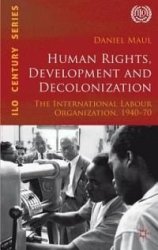
The significance of international organisations as historical actors is one of the least researched aspects 20th century history. Daniel Maul's study of the role of the International Labour Organization (ILO) during the core phase of decolonization (1940 to 1970) opens up new perspectives on the topic.
Clearly presented, methodologically innovative and based on a wide range of sources, Maul explores makes clear the multifarious ways in which the ILO contributed to the debates which accompanied the dissolution of the European colonial empires and the processes of post-colonial nation-building that followed, both as a political hub and a forum for debate and as an independent actor.
Maul takes an innovative look at the history of decolonization, post-colonial nation-building and the enduringly relevant international human rights and development discourses that these processes spawned. Review: 'Abreak-through in historical scholarship on international politics in the twentieth century in general and on the role of international organizations, human rights and development in particular.
It is immensely gratifying to see this excellent book appear in English translation, which makes it available to the large international audience it deserves. A carefully crafted, well-written study, the book will become a standard work for scholars and students in history, political science, human rights and development studies.' - Corinna R.
Unger, Jacobs University Bremen, Germany 'This excellent book offers fresh insights into the complex field of international social policy. After difficult beginnings the International Labour Organization became 'a world en miniature', within which a new state order with new nations and new ideas, hopes, and claims for freedom and human rights emerged in the decades after World War II.
The ILO shaped the process of decolonization in manifold ways and, as Daniel Maul shows on the basis of much new evidence, helped to establish a discourse of global responsibility.' -Andreas Eckert, Humboldt Universitat Berlin, Germany 'This is a rich history for scholars of human rights, international organizations, and development, tightly focused on the ILO but not trapped in the halls of its secretariat.' - Roland Burke, La Trobe University, American Historical Review
 Related Products
Loading similar products...

Stay informed about the best deals and price drops. Choose which notifications you'd like to receive from PriceCheck.


