
| Manufacturer | Unbranded |
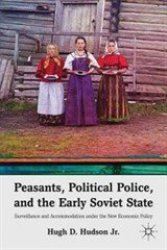
This book combines social and institutional histories of Russia, focusing on the secret police and their evolving relationship with the peasantry in the period leading up to collectivization. Based on an analysis of Cheka/OGPU reports, the book argues that the police did not initially respond to peasant resistance to Bolshevik demands simply with the gun - rather, they listened to peasant voices.
The police argued that compromise was possible, and that the peasants could be convinced to work within the Bolshevik construct of state and society. As time went on, however, local police agents increasingly saw themselves engaged in a war with the peasantry over control of grain and domination of local organs of power.
As the focus shifted from objective economic factors to the putative influence of the kulaks, the only solution became to break the peasantry. Review: '...the greatest contributions of Hudson's study are that it introduces a third actor into the story of peasant-state relations in the early Soviet period - the secret police - and that it suggests that, if the regime failed to reach an accommodation with the peasantry during NEP, it was not for a lack of trying.' - Colleen M.
Moore, Indiana University, The NEP Era: Soviet Russia 1921-1928
 Related Products
Loading similar products...

Stay informed about the best deals and price drops. Choose which notifications you'd like to receive from PriceCheck.


