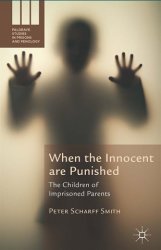

There are millions of children experiencing parental imprisonment worldwide, but up until recently very little attention has been given to this issue and the serious intergenerational effects of imprisonment. This book tells the story of prisoner's children - of their situation, problems and human rights - and how they are treated throughout the justice process from the arrest of a parent to imprisonment and release.
Based on extensive research from across Europe, Scharff Smith argues that it is a paradox that we hail the family as a fundamental unit in our societies, and insist on regarding children as an especially valuable and vulnerable group of citizens, but at the same time break up families on a massive scale as a result of a conscious, planned and generally unquestioned policy of using imprisonment as a key sanction in the repertoire of punishments.
Shedding light on various reform initiatives, this book assists in promoting good practice and improving the experience of children of imprisoned parents. Review: This is a compassionate and gripping account of the impact of arrest, imprisonment and release of parents on children, written from a human rights perspective.
For the children, 'always the losers', these experiences constitute a major life crisis, leaving deep traces. Criminal justice professionals are often moved by these realities in their work. Peter Scharff Smith's careful and poignant analysis shows how the prison, families and society interact, and how much collateral damage is done along the way, particularly during times of punitive sentiment and legislation.
His book represents applied research at its best, changing levels of awareness, proposing reforms, and adding powerfully to the theoretical literature on the modern techniques, technologies and effects of penal power. - Alison Liebling, University of Cambridge, UK Peter Scharff Smith has produced a deeply sensitive and powerful look at an extremely important, widespread, but little examined human rights crisis-the consequences of mass incarceration on the children of the imprisoned.
Of course, these children are innocent of wrongdoing, but placed at grave risk nonetheless by aggressive policies of incarceration that have been pursued worldwide. Smith's insightful analysis is based on a truly impressive number of diverse and corroborating sources of data that enable him to provide both a compelling portrait of this critical problem and offer a number of practical yet urgent and humane solutions.
A magnificent achievement. - Craig Haney, University of California, Santa Cruz, USA
 Related Products
Loading similar products...

Stay informed about the best deals and price drops. Choose which notifications you'd like to receive from PriceCheck.


