
| Manufacturer | Unbranded |
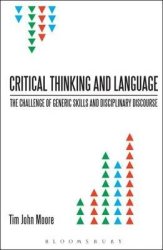
This book explores what it means to be 'critical' in different disciplines in higher education and how students can be taught to be effective critical thinkers. This book clarifies the idea of critical thinking by investigating the 'critical' practices of academics across a range of disciplines. Drawing on key theorists - Wittgenstein, Geertz, Williams, Halliday - and using a 'textographic' approach, the book explores how the concept of critical thinking is understood by academics and also how it is constructed discursively in the texts and practices they employ in their teaching.
Critical thinking is one of the most widely discussed concepts in debates on university learning. For many, the idea of teaching students to be critical thinkers characterizes more than anything else the overriding purpose of 'higher education'. But whilst there is general agreement about its importance as an educational ideal, there is surprisingly little agreement about what the concept means exactly.
Also at issue is how and what students need to be taught in order to be properly critical in their field. This searching monograph seeks answers to these important questions. Review: Abeautifully written analysis of the key term critical thinking as definingacademic expectations of students, especially international students, and anilluminating exploration of the notion of disciplinarity.
This book is a must-read for those framing policy in higher education, for researchers on academicliteracy, and for writing and language instructors helping students to face itscomplex demands.--, The topic ... is a timely one as discussions reverberate around the world about possible dilutions of undergraduate academic standards as the pools of students entering tertiary education continue to increase.
The topic also has considerable intrinsic interest since the precise nature of what is meant by critical thinking is both contested and variable; in effect, criticalness, for many, can stand as a surrogate for one of the defining characteristics of the academic world. Interestingly, the author explores this issue not as might be expected through whether first year undergraduates can indeed be suitably critical in their tutorials or written work, but through the lenses of their instructors, through what they say in interviews, write in their introductory manuals, or ask for in their exercise and essay rubrics.--Sanford Lakoff A beautifully written analysis of the key term critical thinking as defining academic expectations of students, especially international students, and an illuminating exploration of the notion of disciplinarity.
This book is a must-read for those framing policy in higher education, for researchers on academic literacy, and for writing and language instructors helping students to face its complex demands.--Sanford Lakoff
 Related Products
Loading similar products...

Stay informed about the best deals and price drops. Choose which notifications you'd like to receive from PriceCheck.


