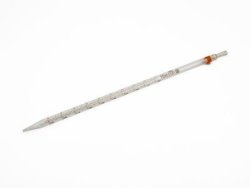
Graduated markings: These are the lines or numbers on the pipette that indicate the volume of liquid being measured.
Bulb or mouthpiece: This is the part of the pipette that is used to draw in or dispense liquid.
Tapered tip: The tip of the pipette is tapered to allow for easier transfer of liquids.
Calibration: Graduated pipettes are calibrated to a specific volume, usually at the bottom of the meniscus.
Different sizes: These pipettes come in various sizes to accommodate different volumes of liquid.
Glass material: Graduated pipettes are typically made of glass, which is resistant to most chemicals and easy to clean.
Versatility: These pipettes can be used for both measuring and transferring liquids, making them versatile tools in a laboratory setting.
Less accuracy: Graduated pipettes are less accurate than volumetric pipettes and are not suitable for precise measurements.
Wide mouth opening: The mouth of the pipette is wider than that of a volumetric pipette, making it easier to pour liquids into.
Can be autoclaved: Glass graduated pipettes can be sterilized through autoclaving, making them suitable for use in sterile environments.
+5 more

 Related Products


