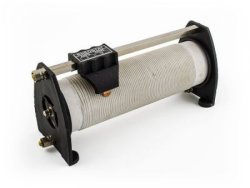
Variable resistance: The main function of a rheostat is to provide variable resistance to a circuit, allowing for the adjustment of current flow.
Resistance wire: The resistance wire used in a rheostat is typically made of a high-resistance material, such as nichrome or tungsten, which can withstand high temperatures without melting.
Adjustable knob or slider: A rheostat typically has a knob or slider that can be moved to change the resistance, allowing for precise control over the current flow.
Low power consumption: As the resistance wire is made of high-resistance material, it consumes very little power, making it an energy-efficient device.
Compact size: Rheostats are often small and compact, making them easy to install and use in various electronic circuits.
Heat dissipation: As the resistance wire can generate heat when current flows through it, rheostats are designed to dissipate this heat to prevent overheating.
Durability: The materials used in rheostats, such as ceramic or porcelain, make them durable and able to withstand high temperatures and frequent use.
Versatility: Rheostats can be used in a variety of circuits and applications, such as in lighting systems, heating elements, and motor speed control.
+3 more

 Related Products


