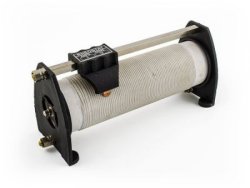
Resistance wire: The main component of a rheostat is a long, coiled wire made of a material with high electrical resistance, such as nichrome or tungsten. This wire is responsible for controlling the flow of electricity in the circuit.
Insulating material: The resistance wire is usually wrapped in an insulating material, such as ceramic or plastic, to protect it from damage and to prevent electric shocks.
Sliding contact: The rheostat has a movable contact or wiper that slides along the resistance wire, allowing the user to adjust the amount of resistance in the circuit. This contact can be moved manually or via a motorized mechanism.
Variable resistance: The main function of a rheostat is to provide variable resistance in a circuit. By moving the sliding contact, the amount of resistance in the circuit can be increased or decreased, controlling the flow of current.
Wide range of resistance: Rheostats can have a wide range of resistance values, from a few ohms to several megaohms, depending on the length and thickness of the resistance wire. This allows for precise control of current flow in a circuit.
Heat dissipation: As electricity flows through the resistance wire, it generates heat. Therefore, rheostats are designed to dissip
+1 more

 Related Products


