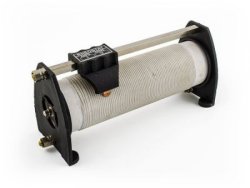
Resistance wire: The main component of a rheostat is a resistance wire, typically made of a material such as nichrome, which provides resistance to the flow of current.
Sliding contact: The sliding contact, also known as a wiper, is a movable metal piece that can be adjusted along the resistance wire to change the amount of resistance in the circuit.
Insulating material: The resistance wire is typically wrapped around or embedded in an insulating material, such as ceramic or plastic, to prevent electrical currents from flowing through the rheostat itself.
Cast-metal end cheeks: The ends of the resistance wire are connected to cast-metal end cheeks, which provide a solid base for the rheostat and allow for easy connection to the rest of the circuit.
Adjustable resistance: The key feature of a rheostat is its ability to adjust the amount of resistance in a circuit, which in turn affects the flow of current and can control the speed or brightness of a device.
No interruption of current: Unlike a regular switch, a rheostat does not completely interrupt the flow of current when adjusted, allowing for a smooth and continuous adjustment of resistance.
Versatility: Rheostats can be used in a variety of circuits and devices, making them a
+2 more

 Related Products


