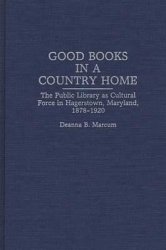

Although urban historians point to the creation of the American public library as one response to the chaos experienced by big cities at the end of the 19th century, this study shows that the library developed in the rural community of Hagerstown, Maryland, resembled its urban counterparts. Business elites, concerned about the image of the town, created a library as the first cultural institution in Hagerstown.
This book traces the societal changes in Hagerstown from 1878 to 1920, examines the motivations of the businessmen for creating the library, and explores the changes in attitude of the librarian who spent her career there. By using the experience of Hagerstown as a case study, the author makes a valuable contribution to the history of rural librarianship and the place of the library in American cultural history.
Review: .,. struggles with urban/rural dichotomy and the search for order and focuses on the motivations of the library's businessmen-founders and its first librarian, Mary Lemist Titcomb. This study is of more than local interest and should stimulate further research. -Library Journal
 Related Products
Loading similar products...

Stay informed about the best deals and price drops. Choose which notifications you'd like to receive from PriceCheck.


