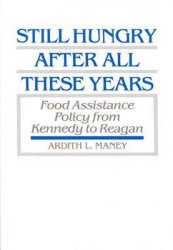

In the 1980s, record numbers of Americans have qualified for food stamps and food aid in other forms, despite increasingly rigid standards of eligibility. After more than two decades of such assistance, hunger and malnutrition remain widespread among low-income groups in the United States. This new study examines the policy processes that have shaped food assistance programs since the Kennedy administration and looks at prospects for resolving the political stalemate over food aid that has overtaken national policy.
Following an analysis of the dynamics of the policy process, Professor Maney explores the various changes that have affected assistance policy since its first phase beginning in 1933. She describes the shifting course of aid policy, which first aimed at supporting farm income and disposing of agricultural surpluses and more recently has attempted to deal primarily with hunger and severe malnutrition.
Focusing on conflicts over policy objectives and budget, the author traces the ups and downs of the struggle between the executive branch and Congress to control both policy and appropriations. Other topics considered are the role of Department of Agriculture planners and administrators, the influence of powerful agricultural interests, the efforts of antipoverty and civil rights activists to secure more equitable food distribution in the rural South, and the effects of joblessness on food assistance policy.
A clear and balanced analysis of one of the gravest policy dilemmas facing the nation, this book is an important resource for professionals, politicians, academics, and students concerned with public policy, social issues, government, and contemporary political economy. Review: ?Maney attempts to examine a particular policy area in order to shed light on the political/bureaucratic policy-making and implementation mechanisms in the US.
In this respect, it is similar to a number of other works, for example, M. Morris and J. Williamson's Poverty and Public Policy or A.L. Fritschler's Smoking and Politics. When compared to such books, this work breaks no new ground or adds substantially to the literature. However, the book makes a major contribution in its discussion of government food assistance policy from its inception through Reagan.
Maney has not written a polemic, but a carefully documented and well-reasoned analysis of the motivations and consequences of these policies. She has carefully avoided political blame or partisanism in her criticism of food assistance programs. Recommended for all libraries and for all those interested in social welfare policies in the US.?-Choice
 Related Products
Loading similar products...

Stay informed about the best deals and price drops. Choose which notifications you'd like to receive from PriceCheck.


