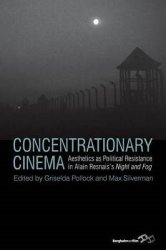

Since its completion in 1955, Alain Resnais's Night and Fog (Nuit et Brouillard) has been considered one of the most important films to confront the catastrophe and atrocities of the Nazi era. But was it a film about the Holocaust that failed to recognize the racist genocide? Or was the film not about the Holocaust as we know it today but a political and aesthetic response to what David Rousset, the French political prisoner from Buchenwald, identified on his return in 1945 as the 'concentrationary universe' which, now actualized, might release its totalitarian plague any time and anywhere?
What kind of memory does the film create to warn us of the continued presence of this concentrationary universe? This international collection re-examines Resnais's benchmark film in terms of both its political and historical context of representation of the camps and of other instances of the concentrationary in contemporary cinema.
Through a range of critical readings, Concentrationary Cinema explores the cinematic aesthetics of political resistance not to the Holocaust as such but to the political novelty of absolute power represented by the concentrationary system and its assault on the human condition. Review: A radical new look at Resnais's pioneering film about the Nazi Holocaust.
Leading experts in French cinema, art history, Holocaust studies and trauma theory confront the film's racial dimension, clarifying both its historical anchorage and lasting significance. This well-edited volume is an important addition to the scholarship on Resnais. * Sandra Hebron, Nigel Floyd and Ginette Vincendeau, Best Moving Image Book Award committee - much of enormous value can be learned from those [contributors] who seek new ways to understand this still elusive, still compelling work [Night and Fog] - these essays are whetstones to sharpen one's thinking. * Cineaste One should not consider [this volume] simply as yet another book on Night and Fog; we are rather dealing with a series of studies on the theme of memory in film, on the historiography and the multiples links between film and reality - The reader who is looking for reflections and inspirations on memory and film will find substantial elements in the Introduction, which perhaps is the most accomplished part with regard to the theoretical framework.
But the volume as a whole suggests a multitude of perspectives that the reader, already familiar with this film, would certainly recognize, hold on to, explore or linger over. * H-France Review
 Related Products
Loading similar products...

Stay informed about the best deals and price drops. Choose which notifications you'd like to receive from PriceCheck.


