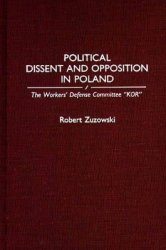

Political dissent in Poland after World War II had changed considerably by the early 1980s. In the 1950s and 1960s it was characterized by spontaneity and lack of strategy; the opposite held true in the 1980s. The people of Poland became highly politicized and openly acting dissident organizations, hostile toward the communist state, flourished.
Robert Zuzowski presents a comprehensive portrait of the unique pattern of dissent, exemplified by the Workers' Defense Committee KOR, which finally triumphed in Poland. He examines the rise of the opposition in Poland, a country which has experienced more political crises than any other East European nation.
Zuzowski argues that KOR, by introducing an innovative approach to political dissent in Poland, contributed significantly to the transformation of Polish politics. The volume also explores dissent in Poland during the two decades prior to the formation of KOR. The reasons for the formation of the Workers' Defense Committee are analyzed and its activities from its inception until the summer of 1980 are chronicled.
The author then examines the Committee's relations with the Roman Catholic Church and dissident organizations. Concluding chapters discuss KOR's formal dissolution and the organization's influence on Polish political culture. This volume will interest students of communism and/or sociopolitical change, as well as all those concerned with East European politics.
Review: The book is well written, lucid, well argued and based on an excellent knowledge of all relevant material. A reader who has little or no acquaintance with recent Polish history will find in the book all necessary explanation. -Leszek Kolakowski All Souls College, Oxford
 Related Products
Loading similar products...

Stay informed about the best deals and price drops. Choose which notifications you'd like to receive from PriceCheck.


