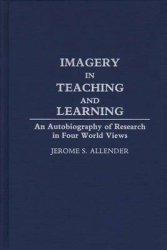

As Jerome S. Allender began to study how elementary school children can use mental imagery to facilitate learning arithmetic, spelling, and vocabulary, it became apparent that imagery techniques were also highly effective tools in the adult learning process, the improvement of teaching skills, and the enhancement of the human learning experience in general.
These findings, accompanied by supporting data and then given practical application, form the core of this volume, explaining how imagery activities access learning potential. Four unique world views form the framework for the study as each examination of mental imagery procedures is guided by quantitative research, action research, qualitative research, or humanistic research principles.
This comparative approach broadens the scope of the work to include not only relevance in the classroom, but also exploration of the role imagery plays in the interaction of fantasy and reality. Researchers will be intrigued by the scientific methodology Allender employs in his study, and teachers will appreciate the practical applications as he investigates a topic whose implications are as limitless as the imagination itself.
Review: Clearly this is a significant book. It is a direct expression of the transformation taking place in our civilization and in our world view. This book exhibits the dawning, jolting, even painful recognition that social science is now dangling between its positivist past and an uncertain future....Future researchers will see this as a valuable account of how researchers confront changing paradigms in social science. - Ron Miller, Editor Holistic Education Review
 Related Products
Loading similar products...

Stay informed about the best deals and price drops. Choose which notifications you'd like to receive from PriceCheck.


