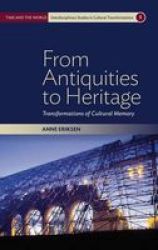

Eighteenth-century gentleman scholars collected antiquities. Nineteenth-century nation states built museums to preserve their historical monuments. In the present world, heritage is a global concern as well as an issue of identity politics. What does it mean when runic stones or medieval churches are transformed from antiquities to monuments to heritage sites?
This book argues that the transformations concern more than words alone: They reflect fundamental changes in the way we experience the past, and the way historical objects are assigned meaning and value in the present. This book presents a series of cases from Norwegian culture to explore how historical objects and sites have changed in meaning over time.
It contributes to the contemporary debates over collective memory and cultural heritage as well to our knowledge about early modern antiquarianism. Review: - a very important book on the difference between antiquities and heritage and the different sense of time, history, and chronology involved. * Lynn A.
Hunt, UCLA The author succeeds in bridging the gap between the history of antiquarianism and the present field of heritage studies... explain[ing]...the transformation of the relations to time from the 18th century up to the present - There is a good balance between the empirical part of the enquiry and its theoretical dimension. * Francois Hartog, EHESS, Paris It is a very sophisticated and well written manuscript on an important topic within the humanities. * Birgitta Svensson, Stockholm University
 Related Products
Loading similar products...

Stay informed about the best deals and price drops. Choose which notifications you'd like to receive from PriceCheck.


