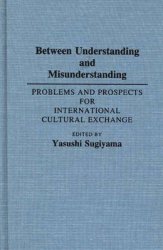

Although international cultural exchange is an important feature of contemporary international relations, it remains one of the most neglected areas of research and training. Since World War II, more than six million academics and countless other individuals have spent significant amounts of time studying and visiting in countries other than their own.
Still, despite this phenomenal development in international cultural exchanges, we have relatively little knowledge of what is involved in such actions, and what their individual, societal, organizational, and governmental effects may be. This volume, a collection of papers presented at the International Cultural Exchange Symposium, examines the study of international cultural exchange and the role that cultural factors play in contemporary international relations.
The book explores the state of this yet-to-be-recognized field, identifying the conceptual, methodological, and administrative problems involved in cultural exchange, and recommending measures that could improve the quality, effectiveness, and costs of international programs. Although the primary focus remains on the issues of U.S.- Japanese exchange, broader themes that touch upon cultural relations in general are also discussed.
Topics covered in the various contributions include problems of U.S.-Japanese educational exchange; issues in British cultural exchange policy; educational cooperation between the University of Massachusetts and Hokkaido University; international broadcasting; and student exchange and the use of technology.
The book's contributors represent some of the United States' and Japan's leading academic institutions, including the University of Massachusetts, Tokyo University, Columbia, the University of Kyoto, and Harvard. This book will be a valuable resource for courses in international relations and communications, cultural anthropology and sociology, and international education, and a necessary addition to libraries at universities, cultural institutions and international organizations.
Review: Educational and cultural exchange turns nations into people and contributes as no other form of communication can to the humanizing of international relations. . . . Far from being a means of gaining national advantage in the traditional game of power politics, international exchange seeks to change the nature of the game, to civilize and humanize it in this nuclear age. -J.
W. Fulbright Hogan & Harston
 Related Products
Loading similar products...

Stay informed about the best deals and price drops. Choose which notifications you'd like to receive from PriceCheck.


