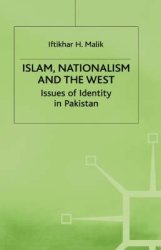

A growing interest in political Islam, also called Islamism, has assumed significant ideological and intellectual dimensions especially in the post-Soviet years. Across the globe, both the Islamic ruling elite and dissidents make great use of Islamic symbols to gain wider legitimacy. Unclaimed receptivity for modernity is, however, contrasted with a vocal resistance to westernization.
Rather than viewing the ongoing situation as Islam versus the rest, or tradition against modernity, Iftikhar H. Malik's study, without overlooking the tensions, also acknowledges the multiple mutualities. It concentrates on topical issues such as the Rushdie affair, conflictive pluralism in South Asia and its linkages with the crucial regional themes e.g. the Kashmir dispute, the Iranian revolution, civil war in Afghanistan and the emergence of independent Central Asian republics.
Review: '...a welcome and excellent contribution to the literature on 'Islam and South Asian politics'...the book is powerful and convincing in its arguments...This is a fine study and will become a classic reference work for students and scholars of South Asia and a piece of scholarship very much worth emulating.' - A.Z.
Hilali, Contemporary South Asia
 Related Products
Loading similar products...

Stay informed about the best deals and price drops. Choose which notifications you'd like to receive from PriceCheck.


